
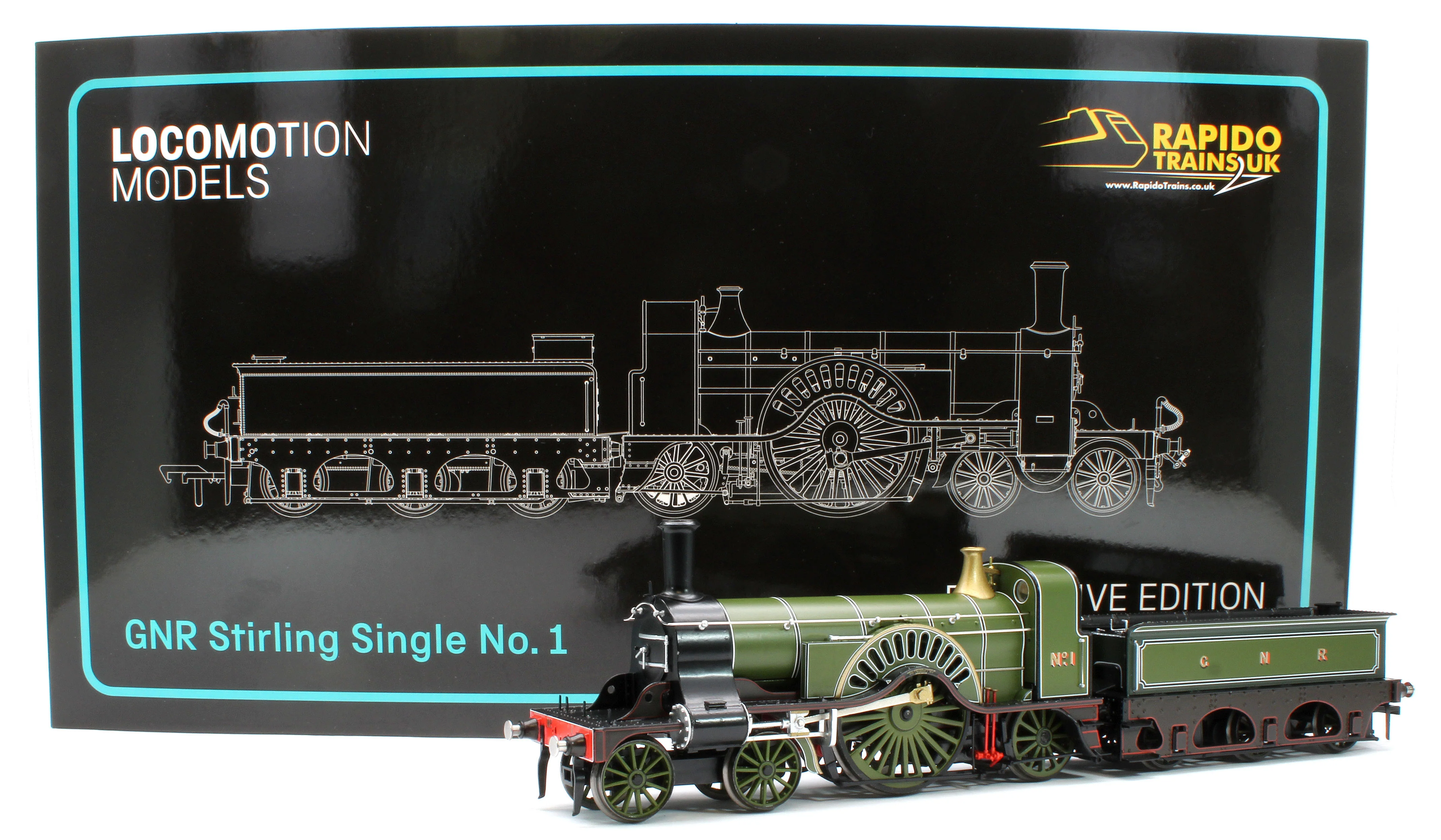
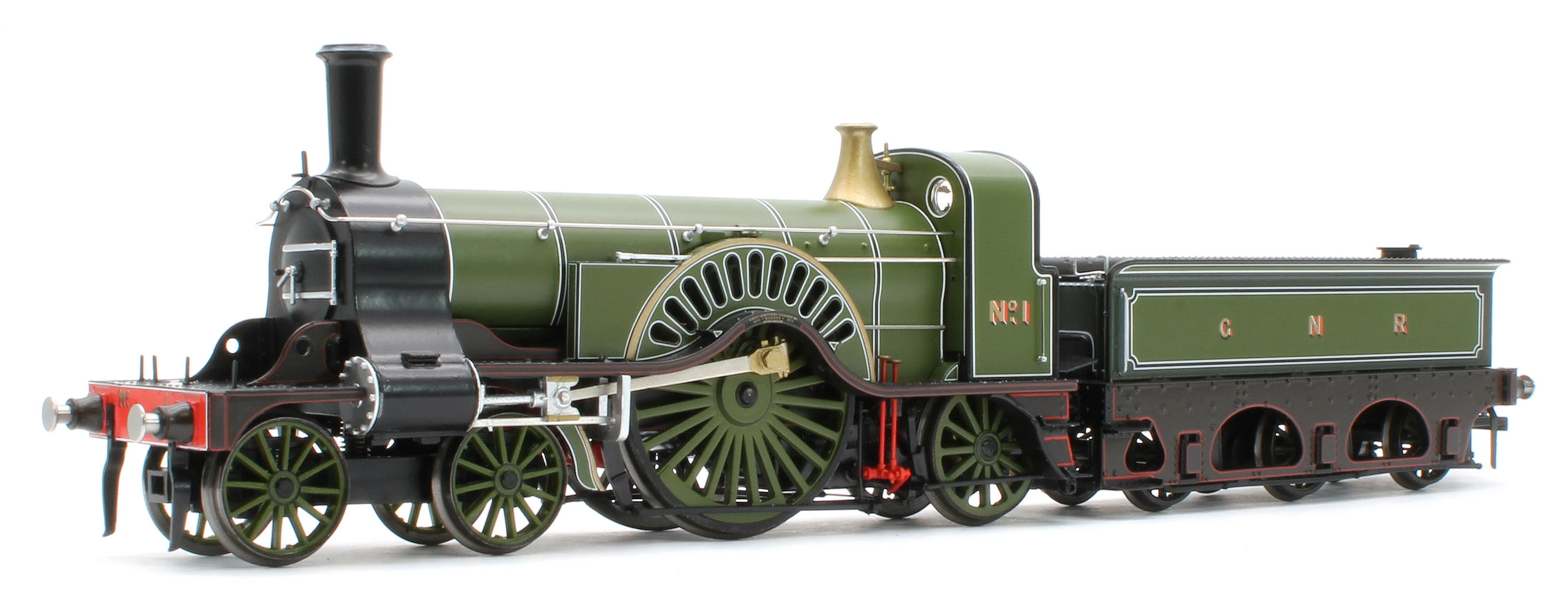
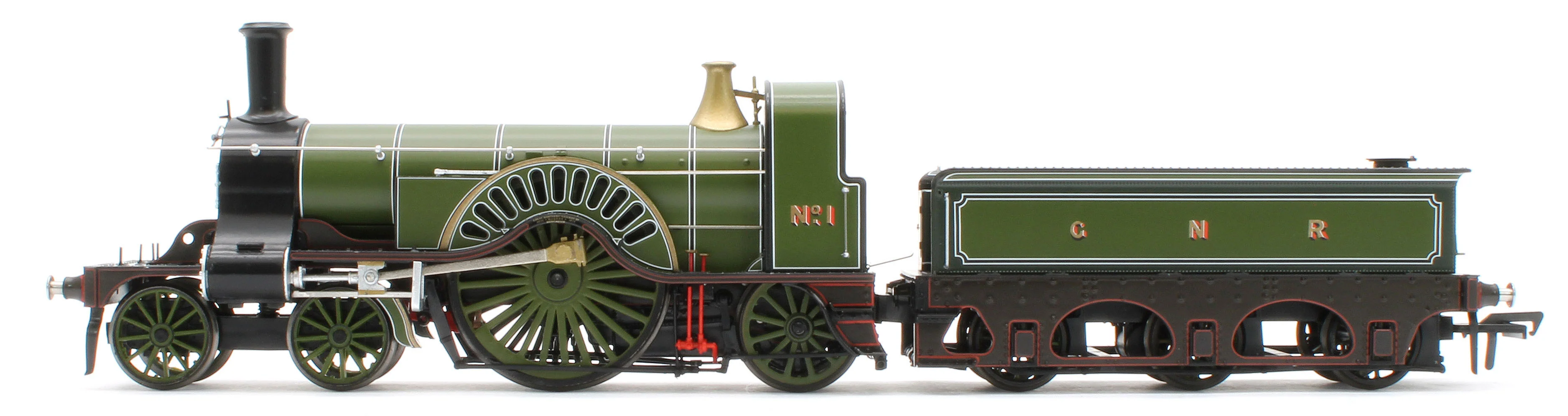


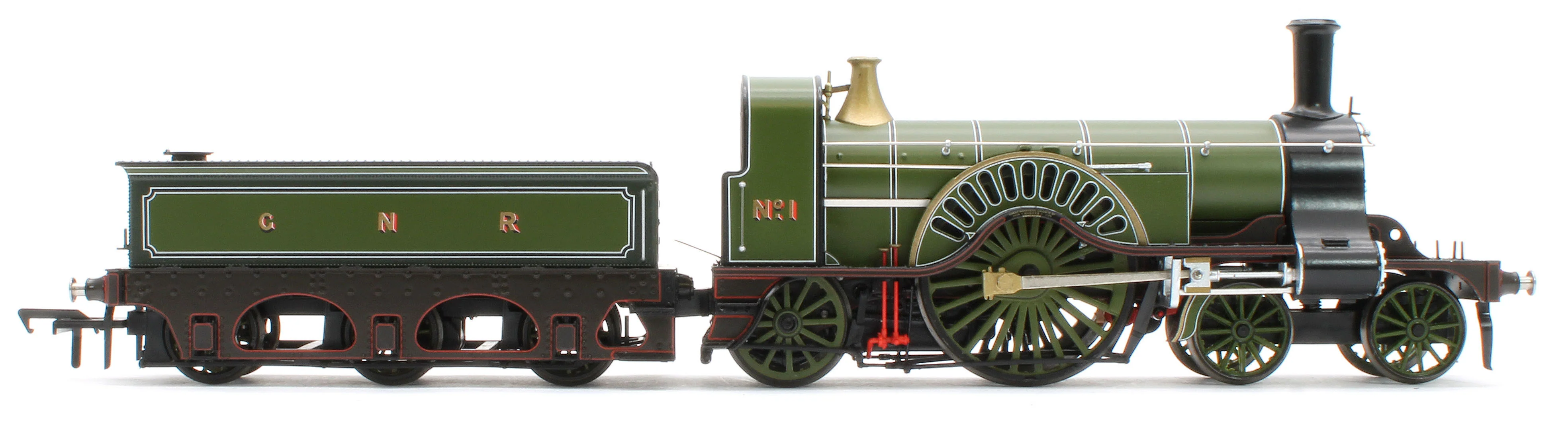

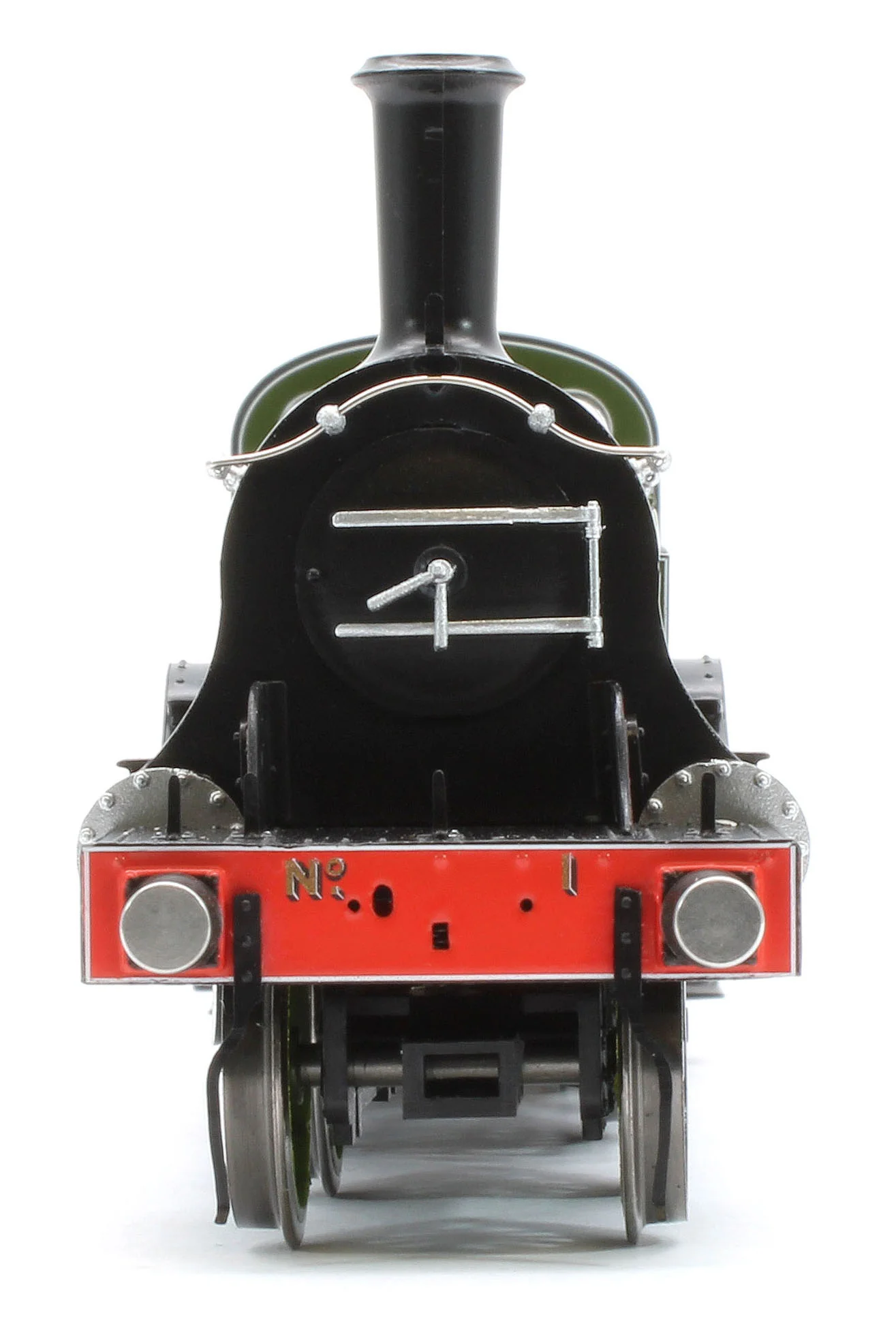


947503 GNR Stirling Single 4-2-2 No.1 '200 Years Special' (Locomotion Models Exclusive) Steam Locomotive - DCC Sound
To Celebrate 200 Years of Train Travel, we are delighted to offer a special boxed version of the GNR Stirling Single No.1, complete with the smaller "Sturrock" tender that the locomotive was paired with from the 1930's for over 80 Years. Although this smaller tender attached to No.1 had no historical claim to be paired with the locomotive in the 1930's, the Sturrock tender being paired with the locomotive is an anachronism that has been perpetuated for so long now that it has acquired its own historical legacy.
Model Features:
- Smooth running mechanism.
- Modified components when compared with the prototypical 'Large Tender' variant.
- Suitable for operation on 2nd Radius curves (438mm or greater).
- Accurate, fine scale precision livery application.
- Working firebox flicker.
- 21-pin DCC decoder socket.
- Factory fitted speaker in all models.
- Accurate sounds obtained from archival footage
- Laser 3D scanned for accuracy.
- Attractive wooden presentation box and sleeve.
The Great Northern Railway (GNR) No. 1 class Stirling Single steam locomotives were designed in the late 1800’s for express passenger work. Designed by Patrick Stirling, they are characterised by a single pair of large (8 ft 1 in) driving wheels which have become iconic in and of themselves. A total of 53 were built at Doncaster Works between 1870 and 1895.
These locomotives were able to haul 279 ton trains at an average of 50 miles per hour (80 km/h), with a top speed on lighter trains of 85 miles per hour (137 km/h). They were unusual in that they used an outside cylinder configuration, a break from the British norm at the time, which in general was to use inside cylinders. With the arrival of more modern steam locomotives, the class started being displaced from the most prestigious express services. Several examples were rebuilt by Henry Ivatt after 1898 with a domed boiler, but withdrawals began in 1899. The last examples of the class were in use on secondary services until 1916.
The first of the class, No. 1, is the only engine to be preserved, and is exhibited in MAIN HALL at the Railway Museum in York. It was restored to running order during the 1930s, and steamed again briefly during the 1980s. The locomotive went through ‘The Stirling Tender Project’ in 2014 returning it to its prototypical condition, which is how it can be seen today.
Product Information
Product Information
Shipping & Returns
Shipping & Returns
Description
To Celebrate 200 Years of Train Travel, we are delighted to offer a special boxed version of the GNR Stirling Single No.1, complete with the smaller "Sturrock" tender that the locomotive was paired with from the 1930's for over 80 Years. Although this smaller tender attached to No.1 had no historical claim to be paired with the locomotive in the 1930's, the Sturrock tender being paired with the locomotive is an anachronism that has been perpetuated for so long now that it has acquired its own historical legacy.
Model Features:
- Smooth running mechanism.
- Modified components when compared with the prototypical 'Large Tender' variant.
- Suitable for operation on 2nd Radius curves (438mm or greater).
- Accurate, fine scale precision livery application.
- Working firebox flicker.
- 21-pin DCC decoder socket.
- Factory fitted speaker in all models.
- Accurate sounds obtained from archival footage
- Laser 3D scanned for accuracy.
- Attractive wooden presentation box and sleeve.
The Great Northern Railway (GNR) No. 1 class Stirling Single steam locomotives were designed in the late 1800’s for express passenger work. Designed by Patrick Stirling, they are characterised by a single pair of large (8 ft 1 in) driving wheels which have become iconic in and of themselves. A total of 53 were built at Doncaster Works between 1870 and 1895.
These locomotives were able to haul 279 ton trains at an average of 50 miles per hour (80 km/h), with a top speed on lighter trains of 85 miles per hour (137 km/h). They were unusual in that they used an outside cylinder configuration, a break from the British norm at the time, which in general was to use inside cylinders. With the arrival of more modern steam locomotives, the class started being displaced from the most prestigious express services. Several examples were rebuilt by Henry Ivatt after 1898 with a domed boiler, but withdrawals began in 1899. The last examples of the class were in use on secondary services until 1916.
The first of the class, No. 1, is the only engine to be preserved, and is exhibited in MAIN HALL at the Railway Museum in York. It was restored to running order during the 1930s, and steamed again briefly during the 1980s. The locomotive went through ‘The Stirling Tender Project’ in 2014 returning it to its prototypical condition, which is how it can be seen today.